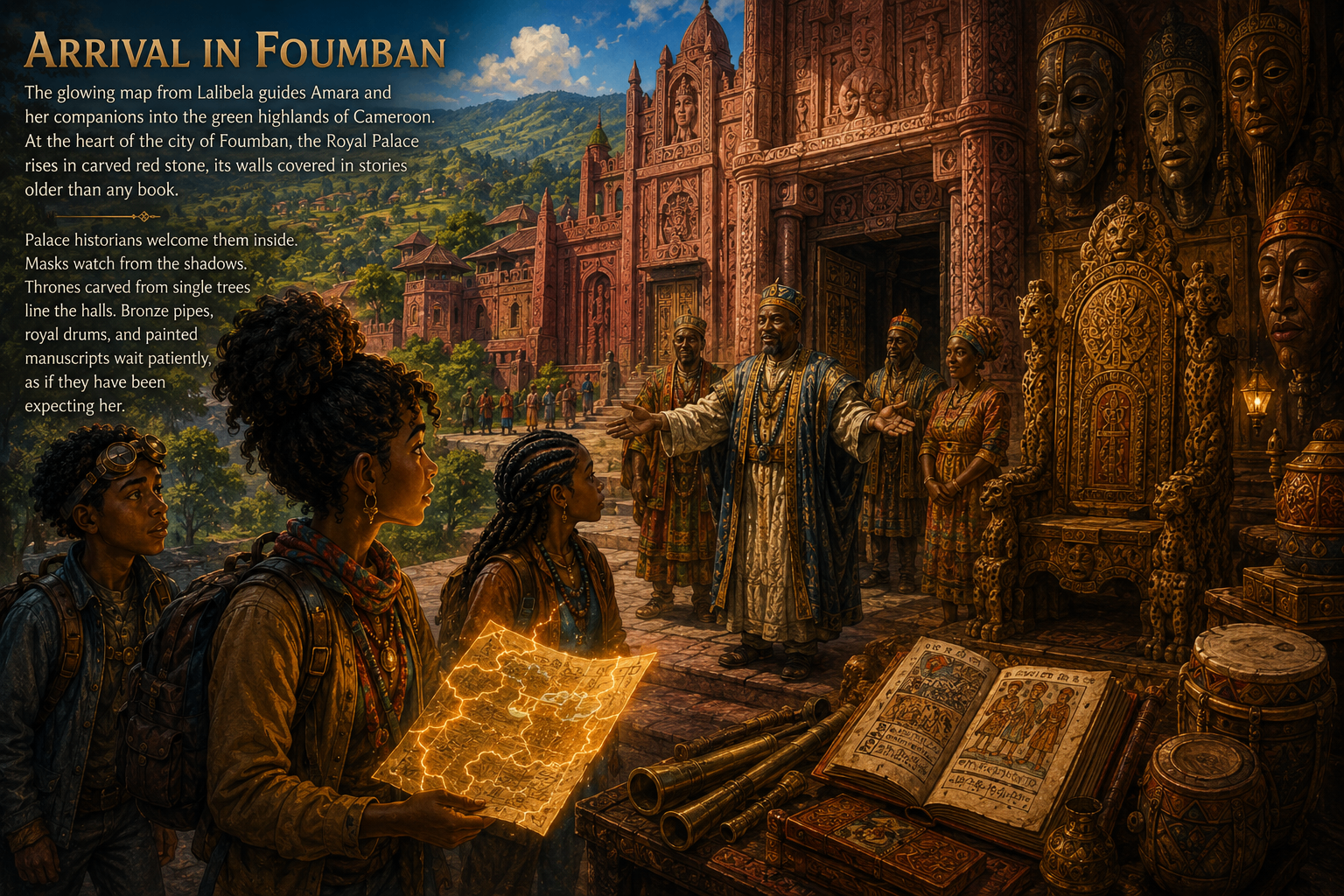
In the highlands of what is today western Cameroon, the Kingdom of Bamum flourished for centuries as a proud African civilization known for its royal court, its artisans, and its capital city of Foumban.
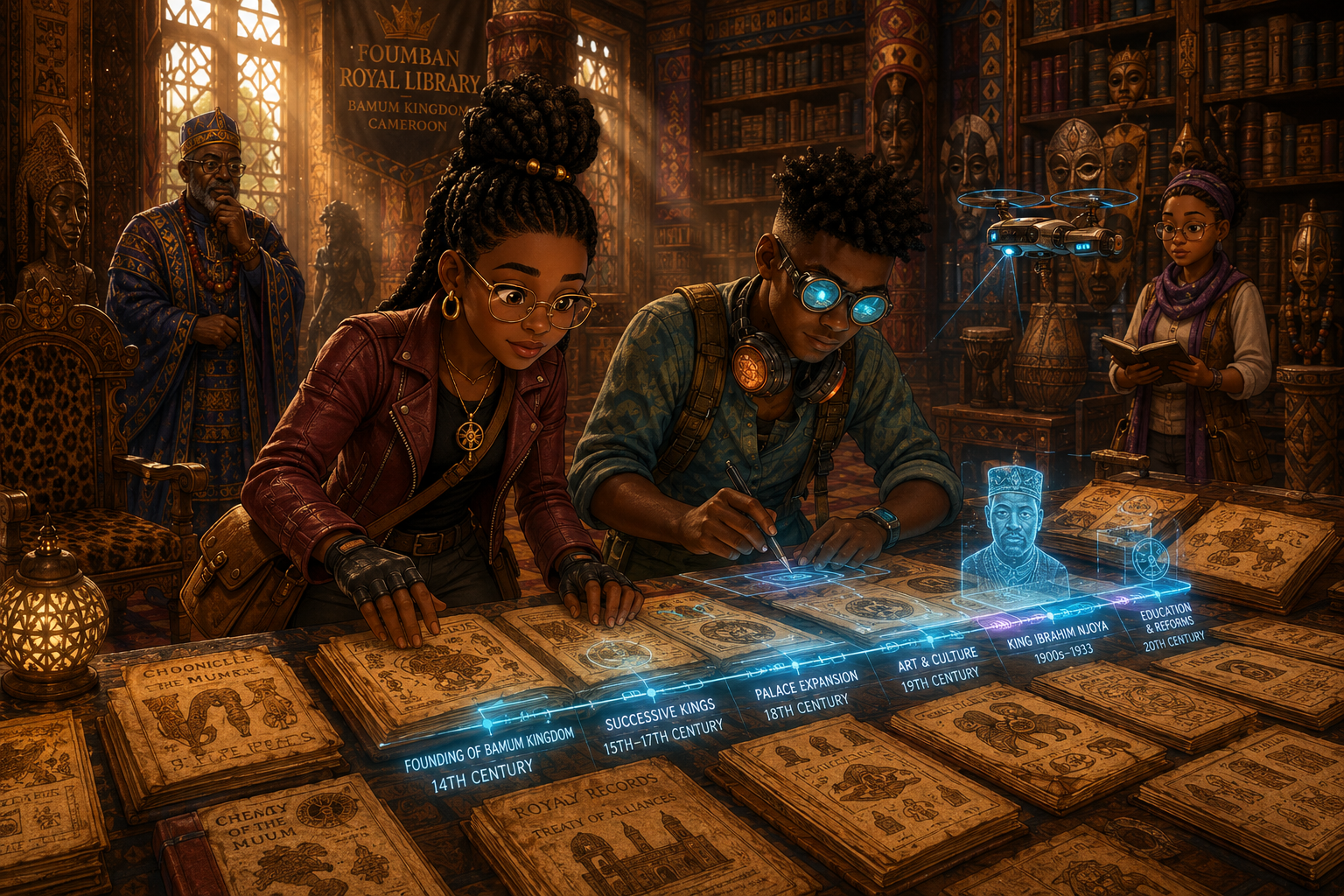
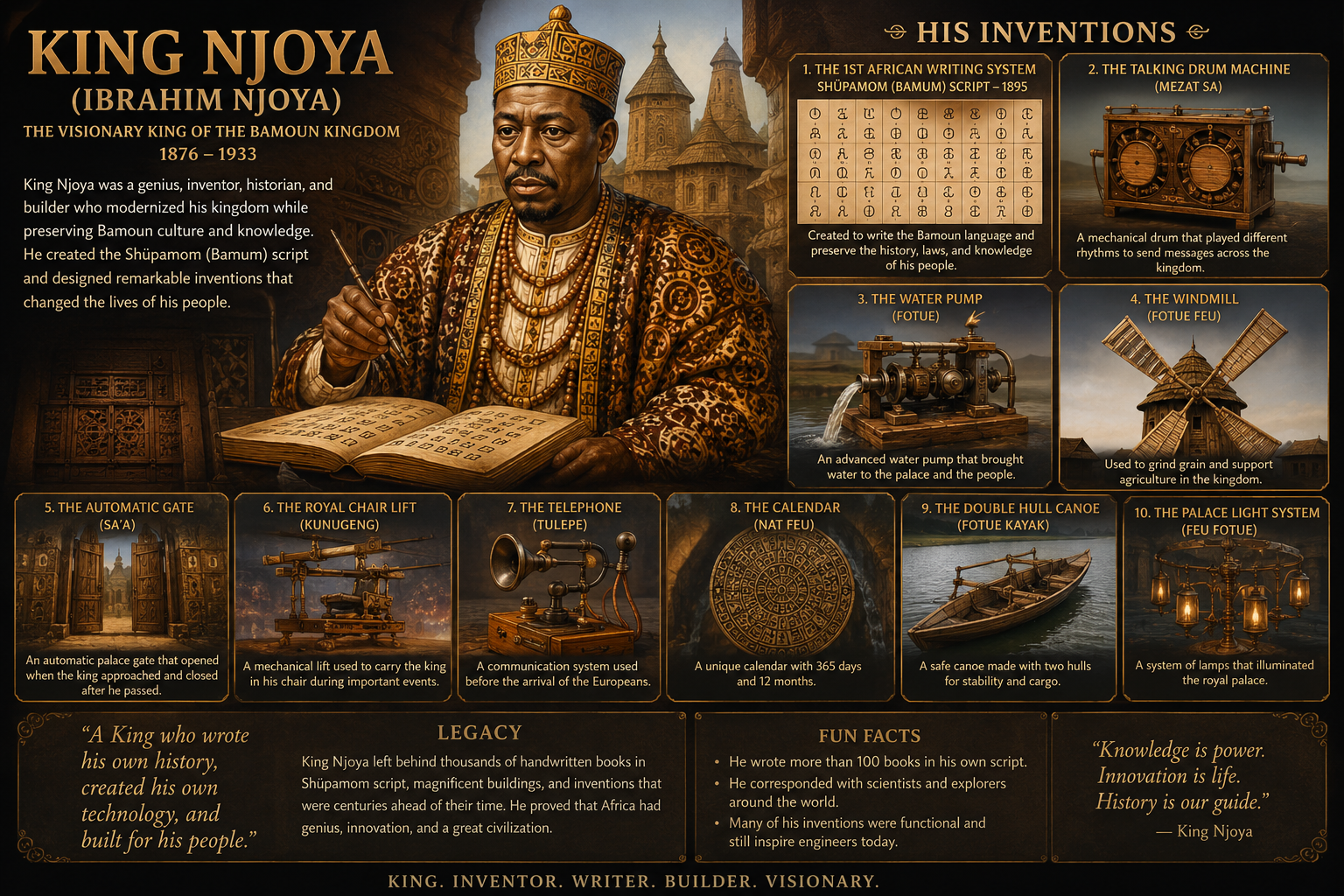
In the late nineteenth and early twentieth centuries, the Bamum people were led by one of Africa's most extraordinary rulers, King Ibrahim Njoya. He was a scholar, an artist, an inventor, and a reformer who believed deeply in the power of education, writing, and cultural preservation.
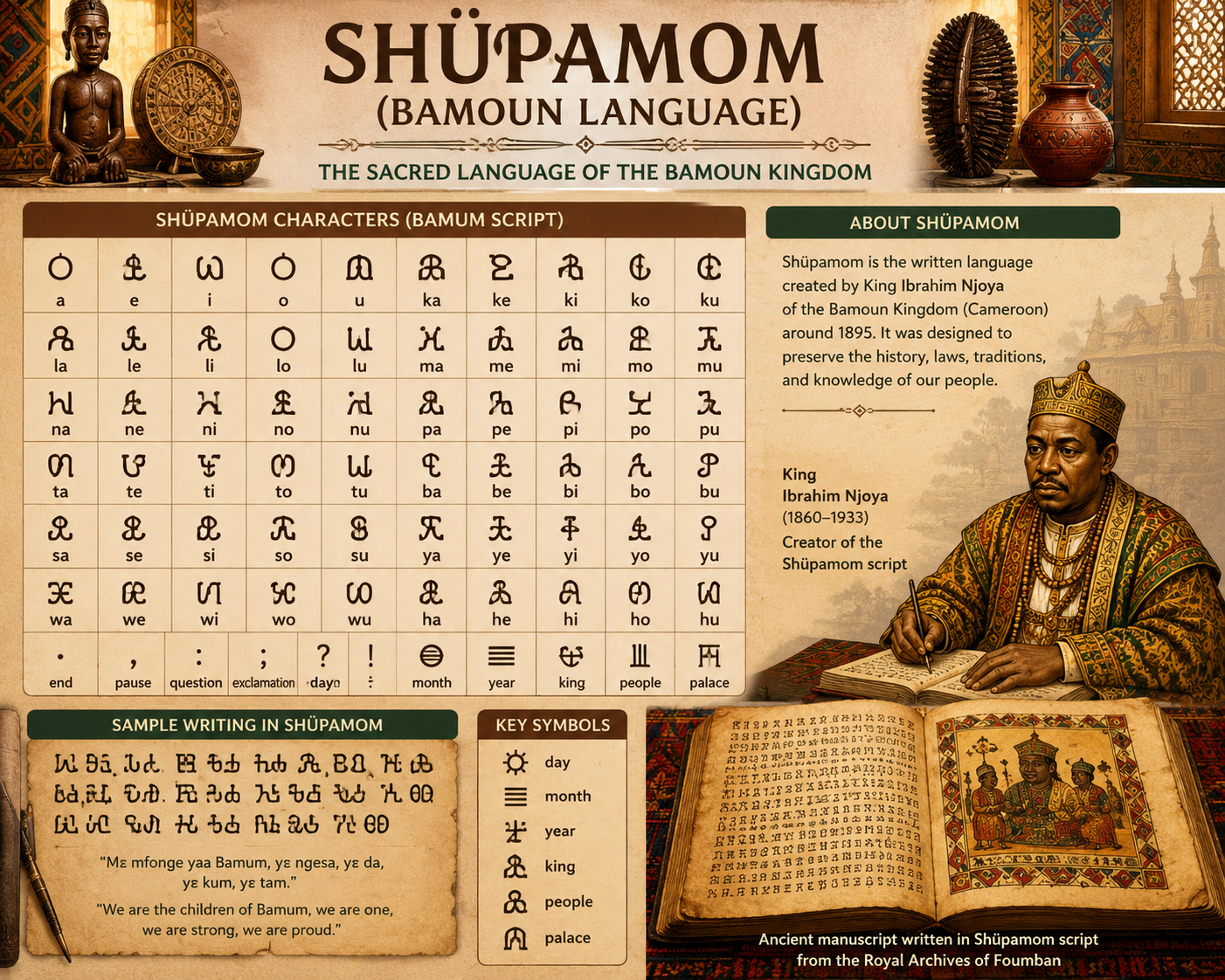
King Njoya's most remarkable achievement was the creation of an entirely new writing system for his own language, known as Shü-mom. Working with palace scribes, he refined the script through several stages until it could record laws, medicine, history, religion, and everyday life. He built schools where children were taught to read and write in Shü-mom, and he even designed a printing press so his people could publish their own books.
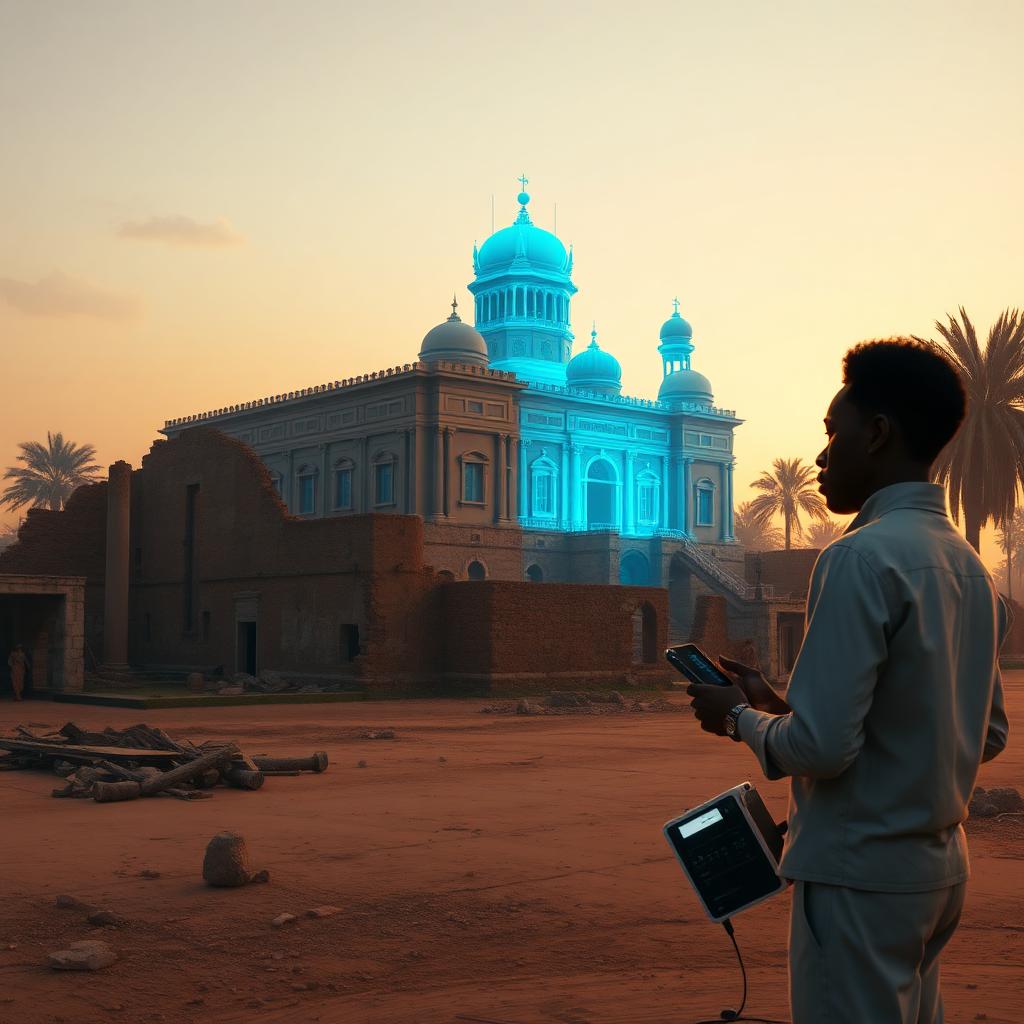
The Royal Palace of Foumban became a center of learning filled with manuscripts, maps, and inventions. It stands today as a proud monument to Bamum history and a living reminder of one of Africa's greatest examples of indigenous literacy.
This episode of Amara the Archivist is inspired by the true history of the Kingdom of Bamum and King Ibrahim Njoya. While Amara's adventure is fictional, the kingdom, the palace, the Shü-mom script, and King Njoya's remarkable achievements are all real.